The core decision
Reserve or conservancy?
Almost nobody is told about this before they book, and it shapes every day of the trip.
What the reserve actually is
The Masai Mara National Reserve is roughly 1,500 square kilometres of government-managed land, administered by Narok County. It is the core of the ecosystem and the part the wildebeest cross into.
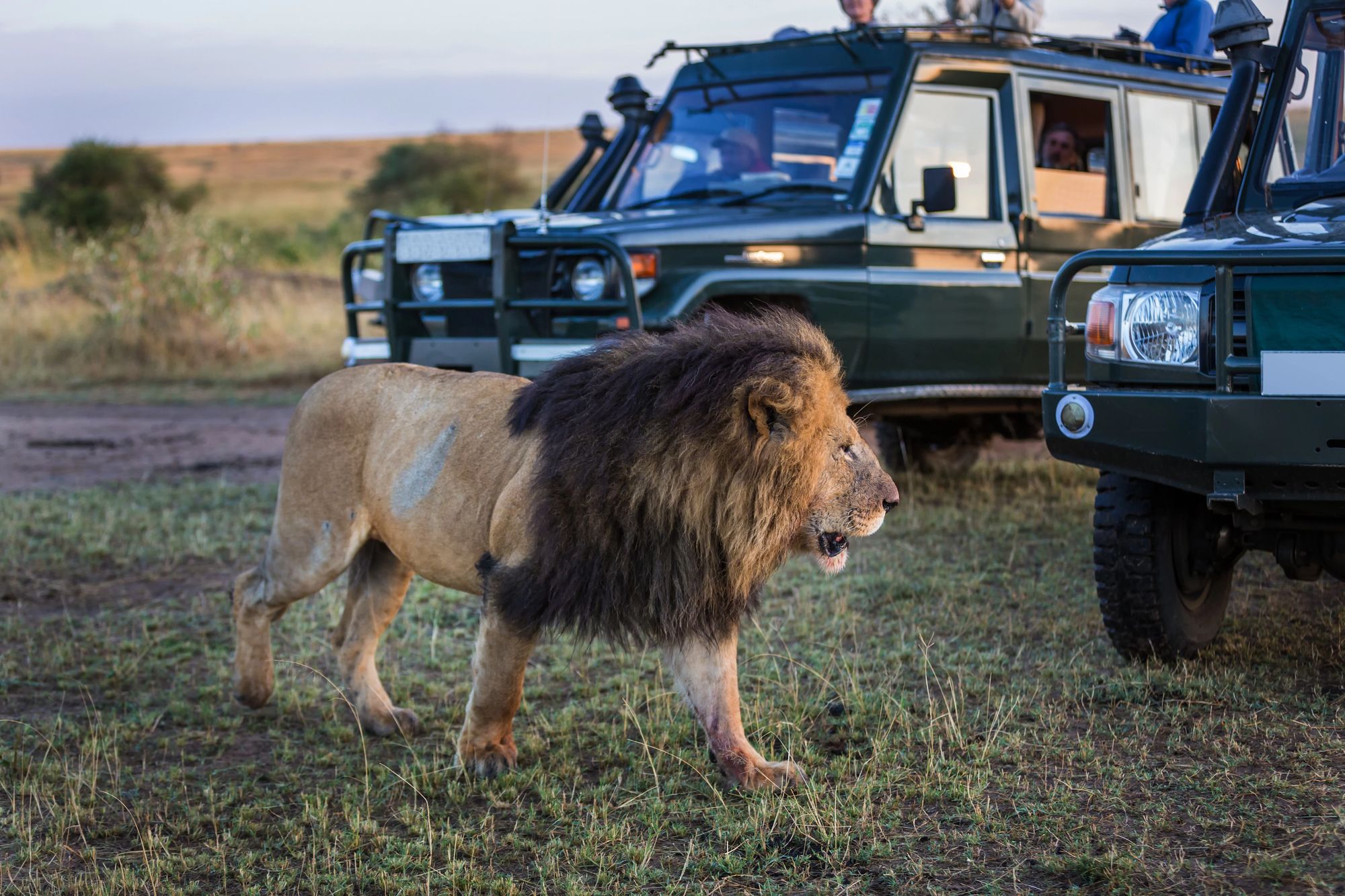
Anyone who pays the daily entry fee can drive it. There is no cap on how many vehicles enter, and no cap on how many gather at a sighting. You must stay on the tracks, you may not drive at night, and you may not get out of the vehicle.
In August, at a river crossing, that can mean a hundred vehicles. That is not a rumour; it is what an uncapped commons looks like at peak demand. It is also where the crossings are, which is the trade.
What a conservancy actually is
The conservancies are private land. Maasai families who own parcels of it have pooled them and leased them to a small number of camps, on the condition that the land stays open — no fences, no farming, limited livestock.
In exchange, each camp pays a fee per guest per night, which goes to the landowning families. The lease also caps how many beds the camp may have per acre, which is the mechanism that keeps vehicle numbers low.
Because it is private land, the landowners set the rules. That is why you can drive off-road to a sighting, go out after dark and walk with an armed guide — none of which the reserve permits.
This is a conservation model, not a marketing one
The alternative to the conservancy lease is not a cheaper safari. It is the land being fenced and subdivided, which is what has happened to plenty of Kenyan rangeland that had no such arrangement.
When a conservancy camp costs more, that gap is largely the lease.
The rules, side by side
| National Reserve | Private conservancy | |
|---|---|---|
| Vehicle numbers | Uncapped | Capped by beds under the lease |
| Vehicles per sighting | No limit | Typically limited, often to three to five |
| Off-road driving | Not permitted | Usually permitted |
| Night drives | Not permitted | Usually permitted |
| Walking safaris | Not permitted | Usually permitted with an armed guide |
| Where the crossings are | Here | A drive from here |
| Typical cost per night | Lower | Higher |
| Who sets the rules | Narok County | The landowners and the camps |
What the conservancy fee pays for
Three things, in order of size: the lease to the landowning families, the conservancy’s own rangers and management, and community programmes — typically schools, clinics and bursaries in the neighbouring group ranches.
It is charged per guest per night and is usually built into the camp rate rather than billed separately, which is why a conservancy camp can look expensive next to a reserve camp with a similar tent.
Who each one suits
| If this is you | Stay here |
|---|---|
| The migration is the reason for the trip | Reserve, near the river |
| Other vehicles would genuinely spoil it | Conservancy, no question |
| You are a serious photographer | Conservancy — off-road access is the whole game |
| First safari, want maximum animals per shilling | Reserve |
| You want to walk, or go out at night | Conservancy |
| Tight budget, flexible on dates | Reserve in green season, or outside the boundary |
| Repeat visitor, done the classic circuit | Conservancy |
| Travelling with young children | Conservancy — more camps take them, more flexibility |
Doing both
The most common good answer, and the one we suggest most often in migration season: two nights in a conservancy for the quiet, the walking and a night drive, then two nights in or beside the reserve while the herds are on the river.
You pay the conservancy premium for half the stay instead of all of it, and you are in the right place on the days it matters.
More from our Kenya guides
Specialist guides across our Kenya network
Each of these is a focused guide we publish. Same Kenya specialist behind every enquiry.
Not sure which side of the line you want?
Tell us your dates and how much other vehicles would bother you. We will tell you plainly which one fits, and what the difference costs.